
Long Term Desiccant Supply Contract: A Complete Buyer’s Guide
Moisture control is an important part of product protection across pharmaceutical, nutraceutical, food, electronics, chemical, medical, and industrial packaging. Desiccants help control unwanted moisture inside sealed packaging and storage environments, protecting products from moisture-related deterioration, corrosion, caking, mold, loss of stability, and packaging damage.
For businesses that use desiccants regularly, purchasing them through individual orders can create unnecessary supply-chain challenges. Fluctuating demand, changing lead times, inconsistent batches, emergency procurement, and unpredictable inventory requirements can make moisture-control procurement more complicated than it needs to be.
This is where a long term desiccant supply contract can provide a more structured procurement solution.
A long-term agreement allows a buyer and desiccant supplier to establish an ongoing supply relationship based on agreed product specifications, expected volumes, delivery schedules, quality requirements, documentation, pricing structures, and communication procedures.
For companies with regular or high-volume desiccant requirements, this approach can improve procurement planning while helping maintain consistency across production and packaging operations.
What Is a Long Term Desiccant Supply Contract?
A long term desiccant supply contract is an agreement between a buyer and a desiccant manufacturer or supplier for the continued supply of desiccant products over a defined period.
Instead of purchasing desiccants only when inventory becomes low, the buyer establishes an ongoing procurement arrangement. Depending on the business requirement, the agreement may cover several months or multiple years.
The contract can define important commercial and technical requirements such as:
- Desiccant type
- Product size and format
- Packaging configuration
- Required quantity
- Minimum order volume
- Delivery frequency
- Lead times
- Pricing terms
- Quality specifications
- Batch documentation
- Testing requirements
- Storage requirements
- Forecasting procedures
- Reorder mechanisms
- Product customization
- Private-label requirements
A well-planned long term desiccant supply contract is therefore more than a purchasing agreement. It can become an important part of a company’s supply-chain strategy.
For example, a pharmaceutical packaging company may require desiccants continuously throughout the year. Instead of placing separate urgent orders every few weeks, the company can establish an annual supply arrangement with defined delivery schedules and quality expectations.
This provides greater visibility for both the buyer and supplier.
Why Businesses Need Long-Term Desiccant Supply
Many industries use desiccants as part of their regular packaging or product-protection processes.
When demand is consistent, relying exclusively on spot purchases may create several challenges.
A company may experience:
- Unexpected stock shortages
- Production delays
- Emergency purchasing costs
- Inconsistent product specifications
- Longer procurement cycles
- Changing supplier availability
- Difficulty forecasting expenses
- Increased administrative work
- Packaging-line interruptions
A long term desiccant supply contract can help reduce these procurement uncertainties by establishing a planned supply relationship.
The supplier can better understand the customer’s expected demand, while the buyer can plan inventory and production requirements more effectively.
Long-term procurement is particularly useful when desiccants are an essential part of the packaging process and cannot simply be removed from the production workflow.
Benefits of a Long Term Desiccant Supply Contract
A properly structured long term desiccant supply contract can provide several operational and commercial advantages.
Consistent Product Supply
The primary advantage is supply continuity.
Businesses that consume large quantities of desiccants need dependable availability. A long-term agreement provides a framework for recurring orders instead of depending entirely on short-term purchasing.
This can be particularly valuable for manufacturers operating multiple production lines or facilities.
Better Procurement Planning
A long-term arrangement makes it easier for procurement teams to forecast their annual or quarterly requirements.
Instead of repeatedly identifying suppliers and requesting quotations, the purchasing team can work within an established supply arrangement.
Improved Inventory Management
Desiccant consumption can often be estimated based on production volumes, packaging requirements, and historical usage.
With a long-term agreement, buyers can establish minimum inventory levels and planned replenishment schedules.
This helps reduce the risk of both stockouts and excessive inventory.
Potential Cost Efficiency
High-volume procurement may provide opportunities for commercially competitive pricing.
Depending on the agreement, pricing may be structured around annual volumes, quarterly commitments, scheduled releases, or other mutually agreed purchasing models.
The objective should not simply be the lowest unit price. Buyers should consider the total cost of procurement, including logistics, quality issues, emergency orders, and inventory management.
Consistent Quality
For applications where moisture control is critical, consistency matters.
A reliable supplier should maintain agreed product specifications across recurring batches. This is especially important when the desiccant is used within standardized packaging operations.
Reduced Administrative Work
Repeatedly sourcing products from different suppliers requires time for quotations, supplier evaluation, purchase orders, documentation, and quality checks.
A long-term relationship can simplify many of these activities.
Industries That Can Benefit From Long-Term Desiccant Procurement
A long term desiccant supply contract can be useful for many industries where moisture protection is part of packaging or storage.
Pharmaceutical Industry
Pharmaceutical products can require controlled packaging environments to help protect product quality and stability.
Desiccants may be used in bottles, containers, cartons, and other packaging systems depending on product requirements.
Nutraceutical Industry
Vitamins, supplements, powders, capsules, and tablets may be sensitive to moisture. Regular desiccant procurement can therefore support consistent packaging operations.
Food Packaging
Certain dry foods and moisture-sensitive products can benefit from appropriate moisture-control solutions.
Electronics
Electronic components can be vulnerable to humidity and moisture during storage and transportation. Desiccants may be incorporated into protective packaging systems.
Medical Devices
Moisture-sensitive medical and diagnostic products may require controlled packaging environments.
Chemical Industry
Some chemicals and industrial materials require protection from environmental moisture during storage and transportation.
Export and Logistics
Products shipped internationally may experience varying humidity conditions during transportation. Desiccants can be incorporated into packaging or shipping protection strategies where appropriate.
What Should Be Included in a Desiccant Supply Contract?
A strong long term desiccant supply contract should clearly define both commercial and technical expectations.
Important elements may include:
Product Specifications
The agreement should identify the exact desiccant product required.
This may include:
- Desiccant type
- Absorption requirements
- Unit weight
- Dimensions
- Packaging format
- Material specifications
- Labeling requirements
Quantity
The contract should define expected purchasing volumes.
For example, the agreement may specify:
- Monthly requirements
- Quarterly requirements
- Annual volume
- Minimum order quantity
- Maximum order capacity
Delivery Schedule
The contract should establish how products will be delivered.
This could include scheduled monthly shipments, quarterly releases, or delivery against purchase orders.
Quality Requirements
Quality expectations should be clearly documented.
Depending on the application, buyers may require:
- Certificate of Analysis
- Technical Data Sheet
- Batch information
- Material specifications
- Packaging specifications
- Testing records
Pricing Terms
The agreement should explain how pricing will work throughout the contract period.
This may include fixed pricing, volume-based pricing, or a mutually agreed adjustment mechanism.
Forecasting
For large-volume customers, forecasting can help the supplier prepare production capacity and raw materials.
The buyer may provide rolling forecasts while confirming individual purchase orders closer to delivery.
Choosing the Right Desiccant Supplier
Choosing a supplier for a long term desiccant supply contract requires more than comparing product prices.
The supplier should be evaluated on several factors.
Manufacturing Capability
Can the supplier consistently manufacture the required quantity?
Large buyers should evaluate production capacity, scalability, and the supplier’s ability to handle demand increases.
Product Range
A supplier with multiple desiccant formats may be able to support changing packaging requirements.
Depending on the application, buyers may consider products such as:
- Silica gel
- Molecular sieve
- Clay desiccants
- Calcium chloride-based solutions
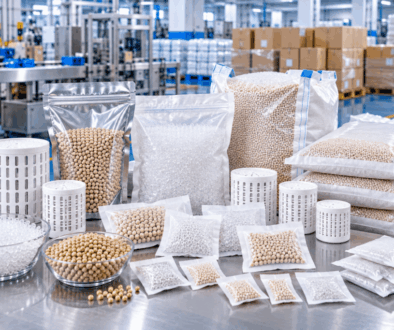
- Desiccant sachets
- Desiccant canisters
- Desiccant strips
- Customized moisture absorbers
Quality Systems
The supplier should have defined quality-control procedures for raw materials, production, packaging, and finished products.
Supply Reliability
A supplier may offer excellent products but still be unsuitable if delivery performance is inconsistent.
Ask about:
- Standard lead times
- Production capacity
- Dispatch processes
- Export experience
- Backup planning
- Order fulfillment capability
Technical Support
A good supplier should be able to understand the customer’s application and help identify an appropriate desiccant configuration.
Quality and Batch Consistency in Long-Term Supply
One of the most important aspects of a long term desiccant supply contract is maintaining consistent product quality over time.
A buyer should not assume that a product will remain consistent simply because the product name and packaging remain unchanged.
Quality expectations should be documented.
The contract can specify acceptable parameters for:
- Product weight
- Moisture absorption performance
- Sachet integrity
- Packaging quality
- Dimensions
- Material composition
- Labeling
- Batch identification
Regular batch documentation can also help procurement and quality teams maintain traceability.
For regulated industries, documentation requirements may be more extensive.
The supplier should understand the buyer’s quality-management expectations before the contract is finalized.
Managing Inventory Through a Long-Term Agreement
Inventory planning is one of the biggest advantages of long-term procurement.
A company can analyze historical consumption and establish an expected monthly requirement.
For example, if a packaging facility consistently consumes desiccants throughout the year, the buyer can create a rolling forecast.
A practical inventory strategy may include:
- Determine average monthly consumption
- Identify seasonal demand changes
- Establish minimum stock levels
- Define reorder points
- Set expected supplier lead time
- Maintain safety stock where appropriate
- Review inventory regularly
- Adjust forecasts according to production changes
This approach can reduce the risk of last-minute purchasing.
A long term desiccant supply contract can also give suppliers better visibility into upcoming requirements, allowing them to plan production more effectively.
Pricing Considerations for Long-Term Desiccant Supply
Price is an important part of any supply agreement, but buyers should avoid evaluating suppliers exclusively on unit cost.
The overall procurement cost may include:
- Product price
- Packaging
- Freight
- Taxes and duties
- Storage
- Quality inspection
- Emergency shipments
- Inventory carrying costs
- Rejected or non-conforming material
- Administrative costs
A slightly higher unit price from a reliable supplier may sometimes result in a lower overall procurement cost if it reduces shortages, quality issues, and emergency orders.
A long term desiccant supply contract can also provide a basis for discussing volume-based commercial terms.
For example, buyers may negotiate different pricing tiers based on annual purchasing commitments.
The final commercial model should be transparent and sustainable for both parties.
Delivery and Supply Chain Planning
Reliable delivery is essential when desiccants are required continuously.
Before signing a long term desiccant supply contract, buyers should discuss realistic lead times.
Important questions include:
- What is the standard production lead time?
- How much notice is required for large orders?
- Can urgent orders be accommodated?
- What happens if demand increases?
- How are delivery delays communicated?
- What packaging is used for transportation?
- What are the shipping terms?
- Can the supplier support multiple delivery locations?
For international buyers, logistics planning becomes even more important.
The agreement should establish responsibilities for transportation, documentation, customs-related requirements, and delivery coordination where applicable.
Documentation and Compliance Requirements
Documentation requirements depend on the industry and application.
Pharmaceutical, medical, food, and other regulated sectors may require stronger documentation and traceability than general industrial applications.
Before entering a long term desiccant supply contract, buyers should identify all documentation they need.
Potential documents may include:
- Certificate of Analysis
- Technical Data Sheet
- Safety Data Sheet where applicable
- Product specifications
- Batch number
- Manufacturing information
- Packaging specifications
- Quality certificates
- Test reports
- Declaration documents where applicable
Documentation requirements should be agreed upon before regular shipments begin.
This prevents repeated clarification between procurement, quality, regulatory, and supplier teams.
How to Evaluate a Long-Term Desiccant Supplier
A structured supplier evaluation can help businesses select the right partner.
Consider creating a supplier scorecard based on:
| Evaluation Factor | What to Check |
|---|---|
| Product Quality | Consistency and specifications |
| Production Capacity | Ability to meet expected volume |
| Delivery | Lead time and fulfillment reliability |
| Pricing | Competitive total procurement cost |
| Documentation | Availability of required records |
| Packaging | Suitable packaging and labeling |
| Customization | OEM or private-label capability if required |
| Communication | Response time and technical support |
| Scalability | Ability to support future growth |
| Experience | Relevant industry and application knowledge |
The best supplier is not necessarily the cheapest supplier.
For long-term procurement, reliability, quality, communication, and scalability can be equally important.
7 Common Mistakes to Avoid
Businesses sometimes focus heavily on pricing when negotiating a long term desiccant supply contract and overlook other important terms.
1. Focusing Only on Price
Low pricing does not compensate for repeated delivery delays or inconsistent quality.
2. Not Defining Product Specifications
The contract should clearly identify the product being purchased.
3. Ignoring Demand Changes
Business volumes can change. Contracts should allow practical mechanisms for adjusting forecasts and quantities.
4. No Quality Agreement
Quality expectations should be documented rather than assumed.
5. No Contingency Planning
Buyers should understand how supply interruptions will be handled.
6. Ordering Without Forecasting
A supplier cannot effectively plan production if demand information is unavailable.
7. Choosing a Supplier Without Checking Capacity
A supplier may be suitable for small orders but unable to support substantial volume growth.
How to Build an Effective Desiccant Procurement Strategy
A successful desiccant procurement strategy starts with understanding actual consumption.
Begin by analyzing historical purchasing data.
Identify:
- Average monthly consumption
- Peak demand periods
- Product variations
- Packaging requirements
- Current supplier lead times
- Inventory carrying costs
- Quality-related issues
- Emergency purchase frequency
Next, establish realistic annual demand.
Once the requirement is understood, approach qualified manufacturers or suppliers for commercial and technical discussions.
The supplier evaluation should consider product quality, production capability, delivery reliability, technical support, documentation, and pricing.
After selecting the supplier, define the contract clearly.
A long term desiccant supply contract should be flexible enough to accommodate reasonable business changes while providing predictable supply expectations.
Regular supplier reviews can then be conducted to evaluate:
- Delivery performance
- Quality performance
- Forecast accuracy
- Cost performance
- Customer service
- Capacity requirements
This creates a continuous improvement process rather than treating procurement as a one-time activity.
Why Long-Term Supplier Relationships Matter
Desiccants may represent only one component of a packaging operation, but their role can be important when products are sensitive to moisture.
A dependable supplier relationship can simplify procurement and improve communication between manufacturing, quality, logistics, and purchasing teams.
With a long term desiccant supply contract, both parties can better understand their responsibilities.
The buyer can communicate forecasts and technical requirements, while the supplier can plan production and delivery capacity.
Over time, this relationship can support:
- Better forecasting
- Faster communication
- Consistent product specifications
- More predictable procurement
- Easier documentation management
- Improved inventory planning
- Better response to demand changes
For growing businesses, this can become particularly valuable.
As production volumes increase, procurement requirements often become more complex. A supplier capable of scaling with the customer can provide continuity instead of forcing the business to repeatedly search for new sources.
Frequently Asked Questions
What is a long term desiccant supply contract?
A long term desiccant supply contract is an agreement between a buyer and supplier for recurring desiccant purchases over a defined period. It can establish product specifications, quantities, pricing, delivery schedules, quality requirements, and documentation expectations.
Why should businesses consider a long term desiccant supply contract?
Businesses with regular desiccant consumption can benefit from improved supply planning, inventory management, procurement efficiency, and supply continuity.
What should be included in a desiccant supply agreement?
Important terms may include product specifications, order quantities, delivery schedules, pricing, quality requirements, documentation, forecasting procedures, packaging requirements, and communication protocols.
Can pharmaceutical companies use long-term desiccant supply agreements?
Yes. Pharmaceutical companies that regularly use desiccants in suitable packaging applications may benefit from structured recurring procurement. Specific product and documentation requirements should be evaluated according to the application.
How do I choose a reliable desiccant supplier?
Evaluate the supplier’s product quality, manufacturing capacity, delivery performance, documentation, technical support, scalability, packaging capabilities, and overall commercial terms.
Can desiccant supply contracts support bulk orders?
Yes. Long-term agreements can be structured around recurring bulk purchasing requirements, subject to the supplier’s production capacity and the buyer’s forecast.
Can pricing be negotiated for long-term desiccant procurement?
Pricing structures can often be discussed based on expected volumes, order frequency, packaging requirements, and contract duration. The final commercial terms depend on the supplier and agreement.
How does long-term supply help inventory management?
A planned supply agreement can allow buyers to establish expected delivery schedules, reorder points, safety stock levels, and demand forecasts, helping reduce the risk of unexpected shortages.
What documents should buyers request from a desiccant supplier?
Depending on the application, buyers may request technical data sheets, certificates of analysis, specifications, batch information, safety documentation where applicable, and other quality or compliance documents.
Is the cheapest desiccant supplier always the best option?
Not necessarily. For recurring procurement, buyers should consider total cost, quality consistency, delivery reliability, technical support, documentation, and supply capacity in addition to unit price.
How can businesses start a long-term desiccant supply relationship?
Start by defining your product specifications, estimated annual volume, packaging requirements, delivery locations, quality expectations, and documentation needs. Then discuss these requirements with a qualified desiccant manufacturer or supplier to develop suitable commercial terms.
What is the advantage of working directly with a desiccant manufacturer?
Working directly with a manufacturer can provide greater visibility into product specifications, production capacity, quality processes, customization options, and recurring supply planning.
Can long-term contracts accommodate changing demand?
They can be structured with forecasting and order-release mechanisms that allow reasonable changes in demand. The exact flexibility should be defined in the agreement.
What makes a good long-term desiccant supplier?
A good supplier should combine consistent product quality, dependable production capacity, reliable delivery, transparent communication, appropriate documentation, technical knowledge, and the ability to support changing customer requirements.
Conclusion
A long term desiccant supply contract can be an effective procurement strategy for businesses that require regular quantities of moisture-control products.
Instead of managing repeated spot purchases, companies can establish an organized supply relationship covering product specifications, quantities, pricing, delivery schedules, quality requirements, documentation, and forecasting.
The key to a successful agreement is selecting the right supplier. Businesses should evaluate manufacturing capability, product consistency, quality systems, delivery performance, documentation, technical support, scalability, and total procurement cost.
For pharmaceutical, nutraceutical, food, electronics, medical, chemical, and industrial applications, reliable moisture-control products can play an important role in protecting packaged goods.
If your organization has recurring desiccant requirements, establishing a structured supply agreement with a capable manufacturer can make procurement more predictable and easier to manage.
When evaluating suppliers, look beyond the initial quotation. Consider whether the supplier can consistently deliver the right product, at the required quality, in the required quantity, and according to your production schedule.
A well-designed long term desiccant supply contract can ultimately create value for both the buyer and supplier by providing greater visibility, stronger supply planning, and a more dependable procurement relationship.