Best Desiccant Manufacturer for Pharmaceutical Bottles: A Complete Guide to Moisture Protection
Moisture control is an important part of pharmaceutical packaging. Many medicines, supplements, capsules, tablets, powders, and other pharmaceutical products can be sensitive to humidity during storage and transportation. Excess moisture inside a bottle may affect product quality, stability, appearance, texture, and shelf life.
This is why pharmaceutical companies often use desiccants as part of their packaging systems. A suitable desiccant can help reduce moisture inside a sealed pharmaceutical bottle and provide additional protection for moisture-sensitive products.
However, choosing the best desiccant manufacturer for pharmaceutical bottles requires careful consideration. Pharmaceutical packaging has specific quality, safety, consistency, and performance requirements. The right manufacturer should be able to provide suitable desiccant materials, reliable packaging formats, consistent quality, and technical support according to the application’s needs.
From silica gel canisters and molecular sieve products to sachets and customized moisture-control solutions, pharmaceutical companies have several options. The ideal choice depends on the medicine, bottle size, packaging configuration, moisture sensitivity, storage conditions, and other application-specific requirements.
This guide explains what to look for when selecting the best desiccant manufacturer for pharmaceutical bottles, the different types of pharmaceutical desiccants, their applications, benefits, quality considerations, and important questions to ask before selecting a supplier.
What Is a Desiccant for Pharmaceutical Bottles?
A desiccant is a moisture-absorbing or moisture-adsorbing material used to help control humidity within an enclosed package.
When a desiccant is placed inside a pharmaceutical bottle, it can help reduce the amount of moisture available inside the bottle. This can be particularly useful for products that may be affected by humidity.
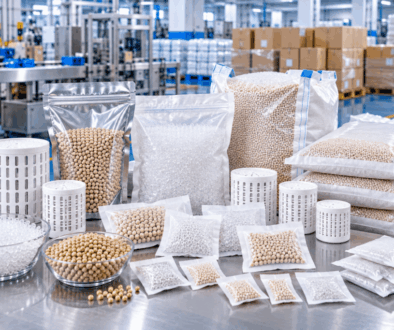
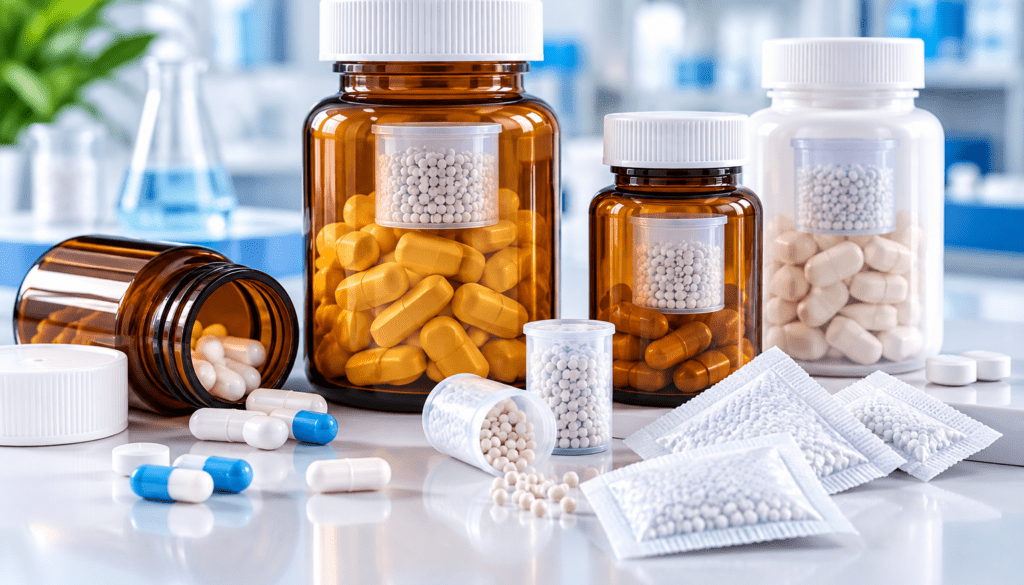
The desiccant can be supplied in different formats, including:
- Canisters
- Sachets
- Packets
- Pouches
- Strips
- Pre-cut formats
- Custom packaging formats
The correct format depends on the pharmaceutical bottle design and the manufacturing process.
A professional best desiccant manufacturer for pharmaceutical bottles should be able to provide suitable options based on the bottle size, product requirements, and packaging system.
Why Do Pharmaceutical Bottles Need Desiccants?
Pharmaceutical products can be sensitive to moisture for several reasons. Water vapor can interact with certain formulations and packaging environments, potentially affecting product characteristics.
For example, moisture exposure may contribute to:
- Tablet softening
- Powder clumping
- Capsule changes
- Product degradation
- Changes in appearance
- Loss of physical stability
- Reduced shelf-life performance
- Packaging-related moisture concerns
A desiccant does not replace proper pharmaceutical packaging or storage practices. Instead, it provides an additional moisture-control layer inside the sealed bottle.
For pharmaceutical manufacturers, selecting the best desiccant manufacturer for pharmaceutical bottles can therefore be an important part of developing an effective packaging strategy.
1. Types of Desiccants Used for Pharmaceutical Bottles
Different pharmaceutical products may require different types of moisture-control materials. The following are some commonly considered desiccant options.
Silica Gel Desiccant
Silica gel is one of the most widely used desiccant materials for moisture control. It has a porous structure that allows it to adsorb water vapor.
Silica gel can be supplied in sachets, packets, canisters, and other formats suitable for packaging applications.
For pharmaceutical bottles, silica gel can be particularly useful when the product requires protection from ambient humidity during storage and distribution.
A reliable best desiccant manufacturer for pharmaceutical bottles should be able to provide consistent silica gel products with suitable specifications and packaging.
Molecular Sieve
Molecular sieve is another desiccant option used in applications where strong moisture adsorption is required.
It has a highly porous structure and can adsorb water molecules under conditions where other desiccants may have different performance characteristics.
Molecular sieve can be considered for specific pharmaceutical packaging requirements where lower humidity levels or specialized moisture control are important.
Activated Clay
Activated clay can also be used for certain moisture-control applications. It may offer an economical option for appropriate packaging environments.
Its suitability depends on the pharmaceutical product, bottle configuration, environmental conditions, and required moisture-control performance.
Custom Desiccant Blends
Some applications may benefit from customized desiccant combinations. A manufacturer may provide a specific blend or packaging configuration according to the customer’s requirements.
Before selecting a custom solution, pharmaceutical companies should evaluate the product’s moisture sensitivity and packaging conditions with the manufacturer.
Benefits of Using Desiccants in Pharmaceutical Bottles
Using an appropriate desiccant can provide several potential benefits for pharmaceutical packaging.
Moisture Control
The primary purpose of a desiccant is to help control moisture within the enclosed packaging environment.
Product Protection
For moisture-sensitive products, controlling humidity can be an important part of maintaining product quality during storage and transportation.
Packaging Support
Desiccants work together with the pharmaceutical bottle, closure, induction seal, and other packaging components to create a more controlled internal environment.
Extended Protection During Distribution
Pharmaceutical products may travel through different climates and storage environments before reaching the end user. A suitable desiccant can provide additional moisture protection during these stages.
Flexible Formats
Desiccants can be supplied in different formats, making them suitable for various pharmaceutical bottle sizes and packaging processes.
Pharmaceutical Bottle Desiccant Formats
The physical format of a desiccant is an important consideration.
Desiccant Canisters
Desiccant canisters are commonly designed for placement inside bottles containing tablets, capsules, or other pharmaceutical products.
They can provide a convenient format that is easy to incorporate into automated packaging operations, depending on the packaging setup.
Desiccant Sachets
Sachets are flexible packets containing desiccant material. They are available in different sizes and filling quantities.
Sachets can be suitable for pharmaceutical bottles when the packaging design allows sufficient space for the packet.
Desiccant Strips
Strips and pre-cut formats may be considered for specialized packaging requirements. Their design can make them suitable for certain production and packaging systems.
Customized Formats
Pharmaceutical manufacturers may require specific dimensions, filling weights, materials, or packaging configurations.
The best desiccant manufacturer for pharmaceutical bottles should be able to discuss available options based on the customer’s packaging equipment and bottle design.
2. Key Factors for Choosing the Best Desiccant Manufacturer for Pharmaceutical Bottles
Choosing a pharmaceutical desiccant supplier should involve more than comparing prices.
Manufacturing Experience
Look for a manufacturer with experience producing desiccants for pharmaceutical and moisture-sensitive packaging applications.
Industry experience can help a manufacturer understand common packaging challenges and product requirements.
Product Quality
Consistent desiccant performance is important. The manufacturer should have appropriate quality-control procedures for raw materials, production, packaging, and finished products.
Suitable Product Formats
A good supplier should offer multiple formats such as canisters, sachets, packets, strips, or customized options.
Production Capacity
Pharmaceutical companies may require large quantities on a regular basis. Check whether the manufacturer can support both current and future requirements.
Technical Support
A capable manufacturer should be able to provide technical information about the desiccant material and its intended application.
Documentation
Depending on the application and customer’s quality requirements, appropriate product specifications, test reports, certificates, and other documentation may be required.
Supply Reliability
Consistent availability is important for pharmaceutical manufacturing. Delays in desiccant supply can affect packaging schedules and production planning.
Pharmaceutical Desiccant Quality Considerations
When selecting the best desiccant manufacturer for pharmaceutical bottles, quality should be one of the highest priorities.
A manufacturer should maintain appropriate controls throughout the manufacturing process.
Important quality considerations may include:
- Raw material quality
- Moisture absorption or adsorption performance
- Product consistency
- Filling weight accuracy
- Packaging integrity
- Dimensional consistency
- Batch-to-batch consistency
- Storage conditions
- Clean manufacturing practices
- Product specifications
- Quality documentation
Pharmaceutical manufacturers should evaluate these factors according to their internal quality requirements and applicable regulatory expectations.
How to Select the Right Desiccant for a Pharmaceutical Bottle
There is no single desiccant that is automatically suitable for every pharmaceutical product.
The selection process should consider several factors.
Product Sensitivity
Determine how sensitive the pharmaceutical product is to humidity.
Bottle Size
The internal volume of the bottle can influence the amount and format of desiccant required.
Product Quantity
A bottle containing a large number of tablets or capsules may have different moisture-control requirements compared with a smaller package.
Packaging Material
The moisture barrier properties of the bottle and closure can influence the internal humidity environment.
Storage Conditions
Temperature, humidity, and storage duration should be considered.
Distribution Environment
Products transported through humid or changing climates may require additional consideration.
Desiccant Capacity
The moisture adsorption capacity of the selected material should be evaluated against the packaging requirements.
A qualified best desiccant manufacturer for pharmaceutical bottles can help customers evaluate these factors and identify an appropriate option.
3. Important Pharmaceutical Applications
Desiccants are used in different pharmaceutical and healthcare-related packaging applications.
Tablets
Some tablets can be affected by moisture. A desiccant inside the bottle can help control humidity and support product protection.
Capsules
Certain capsule formulations may require moisture protection to maintain their intended physical characteristics.
Powders
Powder products can be sensitive to humidity and may experience clumping or other changes when exposed to moisture.
Nutraceuticals
Vitamins, minerals, herbal products, and dietary supplements may also use desiccants as part of their packaging strategy.
Diagnostic Products
Some diagnostic products and healthcare materials may require controlled moisture conditions depending on their formulation and packaging.
Desiccant Manufacturer vs. General Supplier
Pharmaceutical companies can source desiccants through distributors or directly from manufacturers.
A distributor may be useful for smaller orders or specific immediate requirements. However, businesses with ongoing pharmaceutical packaging requirements may prefer to establish a direct relationship with a manufacturer.
Working directly with a best desiccant manufacturer for pharmaceutical bottles can provide better access to product specifications, production information, packaging options, quality documentation, and technical support.
For long-term supply, direct communication can also make it easier to discuss forecast quantities, customization, production schedules, and quality requirements.
Packaging Compatibility Is Important
The desiccant should work effectively within the pharmaceutical bottle without interfering with the product or packaging system.
Before selecting a desiccant, manufacturers should consider:
- Bottle dimensions
- Bottle material
- Closure design
- Internal space
- Packaging equipment
- Desiccant format
- Desiccant size
- Filling process
- Product handling
- Storage requirements
For automated pharmaceutical packaging lines, the physical dimensions and handling characteristics of the desiccant can be particularly important.
A knowledgeable best desiccant manufacturer for pharmaceutical bottles should be able to discuss compatibility with the customer’s packaging process.
How Much Desiccant Is Required?
The required amount of desiccant varies depending on the application.
There is no universal quantity that can be applied to every pharmaceutical bottle.
Factors that may influence the requirement include:
- Bottle volume
- Headspace
- Product moisture content
- Bottle material
- Closure performance
- Environmental humidity
- Storage period
- Transportation conditions
- Required moisture-control level
- Desiccant capacity
Pharmaceutical manufacturers should work with their packaging and quality teams to determine appropriate requirements.
The desiccant manufacturer can then provide technical information to support the selection process.
4. Why Consistency Matters in Pharmaceutical Desiccants
When pharmaceutical products are manufactured in large quantities, consistency becomes particularly important.
A variation in desiccant quality, filling weight, packaging material, or moisture-control performance can create challenges for production and quality management.
A dependable best desiccant manufacturer for pharmaceutical bottles should have controlled production processes designed to maintain consistent product quality.
Batch consistency can be important for companies that purchase desiccants repeatedly and use them across large numbers of pharmaceutical products.
Storage and Handling of Pharmaceutical Desiccants
Desiccants are designed to capture moisture, which means they can begin adsorbing moisture from the surrounding environment if exposed unnecessarily before use.
For this reason, desiccants should be stored according to the manufacturer’s recommendations.
Generally, businesses should consider:
- Keeping products in sealed packaging
- Protecting them from excessive humidity
- Maintaining appropriate warehouse conditions
- Minimizing unnecessary exposure after opening
- Following manufacturer’s storage instructions
- Using appropriate stock rotation practices
Proper storage helps preserve the intended performance of the desiccant before it is incorporated into pharmaceutical packaging.
5. Questions to Ask the Best Desiccant Manufacturer for Pharmaceutical Bottles
Before selecting a supplier, pharmaceutical companies should ask relevant technical and commercial questions.
- What types of pharmaceutical desiccants do you manufacture?
- Do you supply silica gel canisters for pharmaceutical bottles?
- Are molecular sieve products available?
- What sachet and canister sizes are available?
- Can you provide customized desiccant formats?
- What quality-control procedures are followed?
- What product specifications are available?
- Can you provide relevant test documentation?
- What are your minimum order quantities?
- What production capacity do you have?
- What are your typical lead times?
- Can you support regular bulk requirements?
- How should the desiccant be stored?
- Can you provide technical support for product selection?
- Can the desiccant format be integrated into automated packaging operations?
These questions can help pharmaceutical companies compare potential manufacturers and identify a supplier that fits their requirements.
Comparison of Desiccant Options for Pharmaceutical Bottles
| Desiccant Type | Common Format | Key Characteristic | Potential Application |
|---|---|---|---|
| Silica Gel | Canister / Sachet | General moisture adsorption | Tablets, capsules, nutraceuticals |
| Molecular Sieve | Canister / Sachet | Strong moisture adsorption | Specialized moisture-sensitive products |
| Activated Clay | Sachet / Packet | Economical moisture control | Suitable general applications |
| Custom Blend | Customized | Application-specific combination | Specialized packaging requirements |
The appropriate material should always be selected based on the specific pharmaceutical product, packaging system, storage conditions, and moisture-control requirements.
Cost Considerations When Selecting a Pharmaceutical Desiccant Manufacturer
Cost is an important consideration for pharmaceutical companies, particularly when purchasing large quantities.
However, the lowest price should not automatically determine the supplier.
Companies should consider the overall value of the product, including:
- Product quality
- Consistency
- Moisture-control performance
- Packaging quality
- Production capacity
- Technical support
- Documentation
- Delivery reliability
- Customization capabilities
- Long-term supply stability
A slightly higher initial cost may be worthwhile if the supplier provides consistent quality and dependable supply.
The goal should be to select a manufacturer that provides an appropriate balance between quality, performance, service, and commercial value.
Role of a Reliable Desiccant Manufacturer in Pharmaceutical Packaging
A reliable manufacturer can become an important part of the pharmaceutical packaging supply chain.
The relationship can involve more than simply purchasing desiccants. Manufacturers may work with customers to understand bottle sizes, packaging processes, moisture-control requirements, order volumes, and delivery schedules.
This can help pharmaceutical companies develop a more organized approach to moisture protection.
When searching for the best desiccant manufacturer for pharmaceutical bottles, companies should therefore evaluate the supplier’s complete capabilities rather than focusing on one product specification.
Frequently Asked Questions
What is the best desiccant for pharmaceutical bottles?
Silica gel is widely used for pharmaceutical bottle packaging, while molecular sieve and other desiccants may be suitable for specific applications. The best option depends on the pharmaceutical product and packaging requirements.
Why are desiccants used in pharmaceutical bottles?
Desiccants help control moisture inside enclosed packaging and can provide additional protection for moisture-sensitive pharmaceutical products.
Which is better, a silica gel canister or sachet?
Both formats can be useful. The choice depends on bottle size, product type, packaging design, production process, and other requirements.
How do I choose the best desiccant manufacturer for pharmaceutical bottles?
Evaluate manufacturing experience, product quality, available formats, production capacity, quality-control systems, technical support, documentation, customization options, and supply reliability.
Can desiccants be customized for pharmaceutical bottles?
Depending on the manufacturer, customized sizes, filling quantities, materials, and packaging formats may be available.
Can silica gel be used in medicine bottles?
Silica gel is commonly used as a moisture-control material in various packaging applications. The specific product, packaging format, and suitability should be evaluated according to the pharmaceutical application’s requirements.
How much desiccant should be placed inside a bottle?
The required amount depends on factors such as bottle volume, headspace, product characteristics, packaging barrier properties, humidity, storage duration, and transportation conditions.
Can desiccants help protect pharmaceutical products during transportation?
Yes, an appropriately selected desiccant can provide additional moisture protection inside sealed packaging during transportation and storage.
Why is manufacturer quality important?
Consistent desiccant quality helps pharmaceutical companies maintain predictable packaging performance across production batches.
What documents should I request from a pharmaceutical desiccant manufacturer?
Depending on the application, companies may request product specifications, batch-related documentation, test reports, certificates, and other quality documents relevant to their requirements.
Conclusion
Moisture protection is an important consideration in pharmaceutical bottle packaging. Tablets, capsules, powders, nutraceuticals, and other moisture-sensitive products may benefit from controlled humidity conditions throughout storage and distribution.
Choosing the best desiccant manufacturer for pharmaceutical bottles can help pharmaceutical companies identify suitable moisture-control materials and packaging formats for their specific requirements.
Silica gel, molecular sieve, activated clay, and customized desiccant solutions can all have potential applications depending on the product and packaging system. The right choice depends on factors such as product sensitivity, bottle volume, packaging material, storage conditions, transportation environment, and required moisture-control performance.
When comparing manufacturers, businesses should evaluate more than price. Manufacturing experience, product consistency, quality-control procedures, available formats, technical support, documentation, production capacity, customization capabilities, and supply reliability should all be considered.
A dependable best desiccant manufacturer for pharmaceutical bottles can support businesses with consistent products and suitable packaging solutions for their ongoing pharmaceutical manufacturing needs.
By selecting the right desiccant and working with a capable manufacturer, pharmaceutical companies can build a more effective moisture-control strategy and provide an additional layer of protection for sensitive products throughout storage, transportation, and distribution.