
Moisture Absorber for Supplement Bottles: A Complete Guide to Moisture Protection
Moisture can be a major concern for supplement manufacturers, nutraceutical brands, and packaging companies. Vitamins, minerals, herbal supplements, probiotics, capsules, tablets, and powdered formulations can be sensitive to humidity during storage and transportation. Excess moisture may affect product stability, texture, appearance, and overall quality. This is why selecting the right moisture absorber for supplement bottles is an important part of supplement packaging.
A properly selected moisture absorber for supplement bottles helps control humidity inside the container and provides an additional layer of protection for moisture-sensitive products. Depending on the formulation and packaging design, supplement manufacturers may use desiccant packets, sachets, canisters, capsules, or other moisture-control formats.
For supplement brands, choosing a moisture absorber for supplement bottles is not simply about placing a desiccant inside a container. The appropriate product depends on the supplement formulation, bottle size, closure system, expected storage conditions, distribution environment, and required shelf life.
This guide explains how a moisture absorber for supplement bottles works, why moisture protection matters, which desiccant formats are available, how to select the right solution, and what supplement manufacturers should consider when sourcing moisture-control products.
Why Moisture Matters in Supplement Packaging
Many supplement products can interact with moisture from the surrounding environment. Even when a bottle appears tightly closed, humidity can enter through packaging materials, closures, headspace, or repeated opening and closing by consumers.
Moisture can contribute to problems such as tablet softening, powder clumping, capsule changes, loss of physical integrity, and undesirable changes in product appearance.
Using a moisture absorber for supplement bottles can help reduce the amount of available moisture within the bottle environment. The desiccant adsorbs water vapor and helps maintain a drier internal atmosphere.
For manufacturers, moisture control is particularly important when products are expected to remain in storage for extended periods or travel through environments with changing temperature and humidity.
A moisture absorber for supplement bottles can therefore be an important component of an overall packaging strategy.
What Is a Moisture Absorber for Supplement Bottles?
A moisture absorber for supplement bottles is a desiccant product designed to reduce humidity within a sealed or semi-sealed supplement package.
One of the most common materials used for this purpose is silica gel. Silica gel has a porous structure that allows it to adsorb water vapor from the surrounding environment.
Depending on the bottle design and supplement application, the moisture absorber for supplement bottles may be supplied in a small sachet, packet, canister, capsule, or another contained format.
The choice of format depends on factors such as bottle dimensions, supplement type, required moisture capacity, packaging process, and consumer handling requirements.
For supplement manufacturers, the objective is to select a moisture absorber for supplement bottles that provides suitable moisture-control performance without interfering with the packaged product.
How Does a Moisture Absorber Work?
A moisture absorber for supplement bottles works by attracting and retaining water vapor from the surrounding environment.
Silica gel, for example, contains a network of pores that provides a large surface area. Moisture molecules interact with this surface and become adsorbed by the desiccant.
When placed inside an appropriate supplement container, the desiccant can help reduce relative humidity within the package.
The performance of a moisture absorber for supplement bottles depends on several variables, including:
- Desiccant type
- Desiccant quantity
- Bottle volume
- Headspace
- Initial moisture level
- Relative humidity
- Temperature
- Bottle closure
- Packaging permeability
- Storage duration
- Product moisture sensitivity
Because these variables can differ between products, there is no single desiccant size that works for every supplement bottle.
Why Supplements Need Moisture Protection
Supplement products come in many different formulations, and their moisture sensitivity can vary significantly.
Tablets may absorb moisture and change in hardness or appearance. Powders may become sticky or form lumps. Capsules may be affected by environmental humidity depending on their formulation and shell characteristics.
A moisture absorber for supplement bottles can help manage moisture inside the package and support more stable storage conditions.
Moisture control may be particularly relevant for:
- Vitamins
- Mineral supplements
- Herbal supplements
- Dietary capsules
- Nutritional tablets
- Powdered supplements
- Protein-related formulations
- Botanical products
- Probiotic products
- Specialty nutraceutical products
The specific moisture-control requirement should be evaluated according to the formulation and packaging system.
Common Types of Desiccants
There are several types of desiccant materials available for moisture-control applications.
Silica Gel
Silica gel is one of the most widely recognized desiccants used in packaging. It is available in different particle sizes, grades, and packaging formats.
A silica gel moisture absorber for supplement bottles can be supplied in packets, sachets, canisters, or other formats.
Molecular Sieve
Molecular sieve desiccants are designed for applications requiring strong moisture adsorption, particularly at lower humidity levels.
Depending on the supplement packaging requirements, molecular sieve may be considered where specific moisture-control performance is needed.
Clay Desiccants
Clay-based desiccants can also be used in certain packaging applications. They naturally adsorb moisture and may be suitable for specific general-purpose packaging requirements.
Other Desiccant Materials
Other moisture-control materials may be available for specialized applications. The correct choice depends on the product, packaging system, storage environment, and performance requirements.
A qualified supplier can help determine whether a particular moisture absorber for supplement bottles is appropriate for the intended application.
Moisture Absorber Formats for Supplement Bottles
The physical format of the desiccant is just as important as the desiccant material itself.
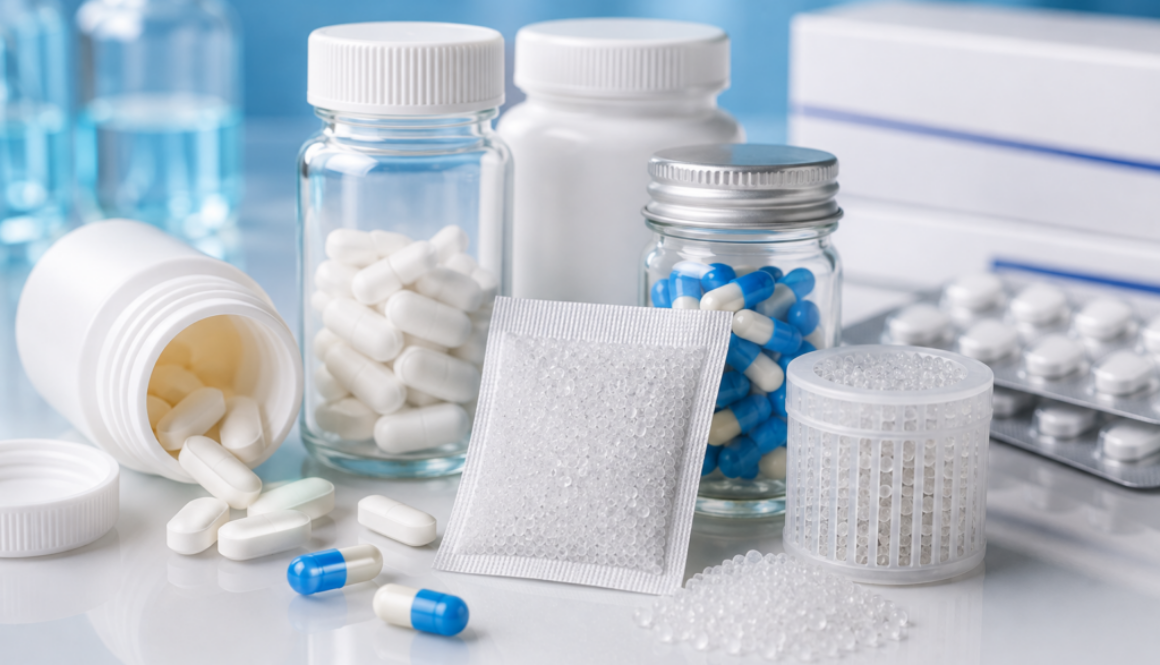
Desiccant Packets
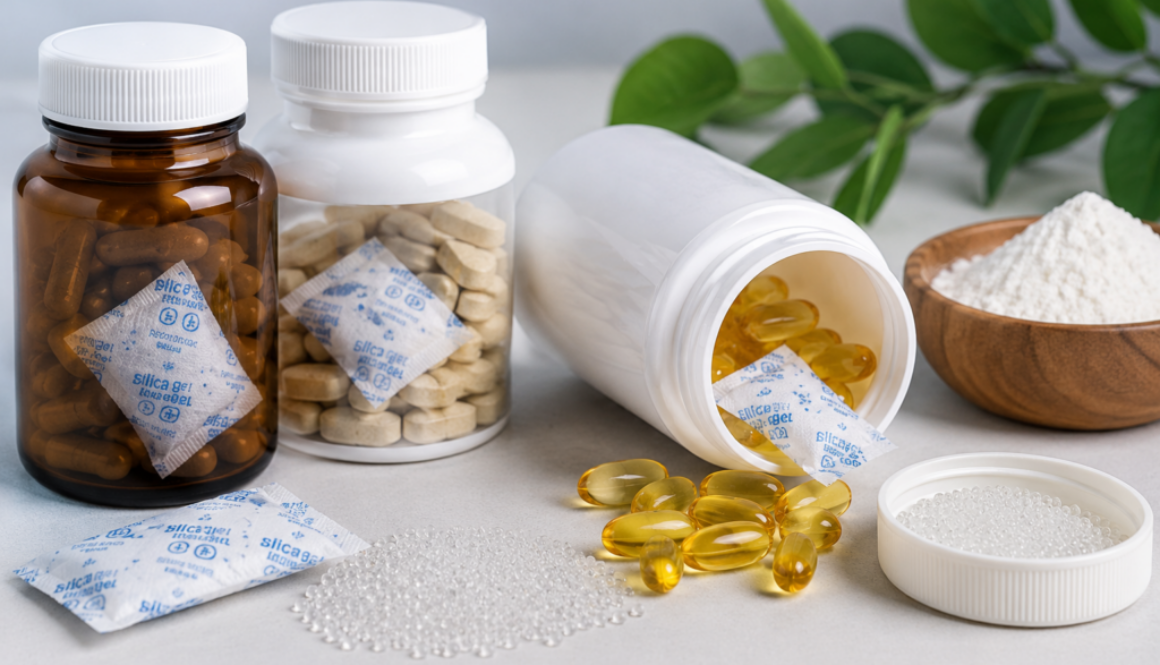
Small packets are commonly placed inside bottles containing tablets, capsules, or other solid supplement products.
A packet can provide an efficient way to introduce a moisture absorber for supplement bottles without occupying significant space.
Desiccant Canisters
Canisters are another popular format for supplement bottles. They can be designed to fit inside containers and provide moisture adsorption throughout the product’s storage period.
Desiccant Capsules
Capsule-style desiccants can be useful for automated packaging processes and certain bottle configurations.
Custom Sachets
Custom sachets can be produced according to required dimensions, weights, packaging materials, and labeling specifications.
Choosing the appropriate moisture absorber for supplement bottles format can improve compatibility with the manufacturing and filling process.
Applications Across Supplement Products
A moisture absorber for supplement bottles can be used across numerous supplement categories.
Vitamin Tablets
Vitamin tablets may require moisture protection depending on their formulation and packaging environment. A suitable desiccant can help manage humidity inside the bottle.
Capsules
Capsule products can also benefit from controlled moisture conditions. The appropriate desiccant depends on the capsule material, formulation, and packaging configuration.
Herbal Supplements
Herbal and botanical products may have specific moisture sensitivities. A moisture absorber for supplement bottles can be incorporated into packaging to help control humidity.
Powdered Supplements
Powdered products can be particularly sensitive to humidity because moisture may contribute to clumping or changes in flow properties.
Probiotic Products
Some probiotic formulations can have specialized storage requirements. Moisture management may be one part of the overall packaging strategy.
How to Choose the Right Moisture Absorber
Selecting the right moisture absorber for supplement bottles requires an understanding of the product and its packaging environment.
Manufacturers should evaluate the formulation, bottle size, expected storage conditions, and distribution environment before deciding on a desiccant.
1. Evaluate the Supplement Formulation
Start by determining how sensitive the supplement is to moisture. Tablets, capsules, powders, and other formulations may have different requirements.
2. Determine Bottle Size
The internal volume and headspace of the bottle can influence the amount of desiccant required.
3. Consider Storage Conditions
Consider the expected temperature and humidity during storage, transportation, warehousing, and distribution.
4. Evaluate the Packaging System
Bottle material, closure design, liner, induction seal, and other packaging components can influence moisture ingress.
5. Determine the Required Desiccant Quantity
The quantity should be selected based on the expected moisture load and desired protection period.
6. Select the Appropriate Format
Choose between packets, sachets, canisters, capsules, or another format based on the packaging process.
7. Review Supplier Documentation
Ask for appropriate product specifications and quality documentation based on the application.
8. Consider Manufacturing Compatibility
The moisture absorber for supplement bottles should be compatible with the supplement filling and packaging process.
9. Consider Consumer Experience
The desiccant format should be securely contained and appropriately designed for the intended packaging environment.
10. Plan for Consistent Supply
For large supplement manufacturers, reliable recurring supply is essential for uninterrupted production.
Important Factors to Consider
When selecting a moisture absorber for supplement bottles, several factors deserve careful attention.
Adsorption Capacity
The desiccant should provide suitable moisture adsorption for the intended environment.
Desiccant Weight
Different bottles may require different desiccant quantities. Using too little may provide inadequate protection, while excessive desiccant may be unnecessary.
Packet Dimensions
The physical size of the moisture absorber for supplement bottles should fit comfortably within the bottle without interfering with filling, sealing, or product use.
Packaging Material
The packet or container material should allow appropriate moisture interaction while keeping the desiccant properly contained.
Storage Period
Longer storage periods may require careful evaluation of moisture exposure and desiccant capacity.
Distribution Conditions
Supplements may travel through multiple climates and environments before reaching consumers. These conditions should be considered when selecting moisture protection.
Benefits of Using a Moisture Absorber
A properly selected moisture absorber for supplement bottles can provide several packaging benefits.
Helps Control Humidity
The primary purpose of a desiccant is to reduce available moisture within the package.
Supports Product Stability
Moisture control can help maintain the physical condition of moisture-sensitive supplements.
Helps Protect Product Appearance
Humidity can affect the appearance of certain tablets, powders, and other formulations. Moisture management can help reduce these risks.
Supports Longer Storage
Appropriate moisture control may contribute to maintaining product quality throughout the intended storage period.
Easy to Integrate
Many desiccant formats can be introduced into supplement bottles during the packaging process.
Available in Multiple Formats
Manufacturers can select from different packet, sachet, canister, and capsule configurations.
Moisture Absorber for Different Supplement Formats
Different supplement formats may require different approaches to moisture management.
For tablets, a moisture absorber for supplement bottles can help reduce humidity in the bottle headspace.
For capsules, the desiccant can provide additional protection against environmental moisture depending on the formulation and packaging system.
For powdered supplements, moisture control may be especially important because humidity can contribute to clumping and handling issues.
For botanical and herbal supplements, packaging requirements can vary depending on the formulation and ingredients.
For specialty nutraceutical products, manufacturers should evaluate moisture sensitivity and packaging performance before selecting a moisture absorber for supplement bottles.
Packaging and Storage Considerations
The performance of a moisture absorber for supplement bottles depends partly on the overall packaging system.
A bottle with a properly designed closure and barrier characteristics can reduce moisture ingress. A desiccant then provides additional moisture-control capacity inside the container.
Manufacturers should also consider warehouse conditions. If supplement bottles are stored in high-humidity environments, moisture exposure can increase.
Transportation can introduce additional challenges because products may move through different climate zones.
For this reason, the moisture absorber for supplement bottles should be selected as part of the complete packaging strategy rather than treated as an isolated component.
Quality and Supplier Considerations
Choosing a dependable supplier is an important step when sourcing a moisture absorber for supplement bottles.
Supplement manufacturers should evaluate product consistency, manufacturing quality, available packaging formats, technical specifications, customization capabilities, and supply reliability.
The supplier should be able to communicate relevant information about the desiccant material, packaging format, product specifications, and recommended application.
For companies with recurring production requirements, supplier consistency is particularly important.
A reliable moisture absorber for supplement bottles supplier can help businesses maintain consistent packaging specifications across multiple production runs.
Customized Moisture Absorber Solutions
Not every supplement bottle has the same requirements. Some manufacturers may need customized desiccant weights, dimensions, packaging, labels, or materials.
Customization can be useful when bottles have limited internal space or when a specific automated packaging process is being used.
A customized moisture absorber for supplement bottles can be designed around the packaging requirements of a particular supplement product.
Potential customization options may include:
- Desiccant weight
- Packet dimensions
- Sachet material
- Canister configuration
- Printing
- Labeling
- Packaging specifications
- Bulk quantities
- Private-label requirements
Businesses should communicate their exact requirements to the supplier before finalizing a customized product.
Why the Right Desiccant Size Matters
Selecting the right size is important when using a moisture absorber for supplement bottles.
A bottle with a small internal volume may require only a small quantity of desiccant, while larger containers may require greater moisture adsorption capacity.
The appropriate quantity should also account for expected moisture ingress during storage and distribution.
Manufacturers should avoid selecting desiccant quantities solely based on bottle size. Product moisture content, packaging permeability, storage conditions, and expected shelf life can also influence the requirement.
Testing and technical evaluation can help determine a suitable moisture absorber for supplement bottles for a particular product.
Frequently Asked Questions
What is a moisture absorber for supplement bottles?
A moisture absorber for supplement bottles is a desiccant placed inside supplement packaging to adsorb moisture and help maintain a drier environment within the container.
Why do supplement bottles need moisture absorbers?
Some supplements are sensitive to humidity. A moisture absorber for supplement bottles can help control moisture and support the physical quality of tablets, capsules, powders, and other products.
What is the most common moisture absorber used in supplement bottles?
Silica gel is one of the commonly used desiccant materials for packaging applications. The appropriate material depends on the product and packaging requirements.
Can silica gel be used with vitamins?
Silica gel can be used as a desiccant in many vitamin and supplement packaging applications. The specific grade and packaging format should be selected according to the product requirements.
Are desiccant packets suitable for supplement bottles?
Desiccant packets can be suitable for many supplement bottles. The correct packet size and desiccant quantity depend on the bottle and product requirements.
Can supplement manufacturers customize desiccant packets?
Depending on the supplier, businesses may be able to customize desiccant weight, packet dimensions, packaging, printing, labeling, and other specifications.
How much desiccant should be placed in a supplement bottle?
There is no universal quantity. The appropriate amount depends on bottle volume, moisture sensitivity, storage conditions, packaging properties, and expected moisture exposure.
Does every supplement bottle need a moisture absorber?
Not necessarily. The need for a desiccant depends on the formulation, packaging system, moisture sensitivity, and storage requirements of the product.
Can a moisture absorber improve supplement shelf-life?
A moisture absorber for supplement bottles can help control humidity, which may support product quality during storage. However, shelf life depends on the complete formulation and packaging system and should be established through appropriate testing.
What should manufacturers look for in a desiccant supplier?
Manufacturers should evaluate product consistency, adsorption performance, packaging formats, quality documentation, customization capabilities, production capacity, and supply reliability.
Can a moisture absorber be used for powdered supplements?
Yes, moisture-control desiccants can be considered for powdered supplement packaging. The appropriate solution depends on the powder formulation and packaging conditions.
What packaging formats are available?
Common formats include packets, sachets, canisters, capsules, and customized desiccant containers.
Conclusion
A moisture absorber for supplement bottles can play an important role in protecting moisture-sensitive vitamins, capsules, tablets, powders, herbal supplements, and other nutraceutical products.
Humidity can enter supplement packaging through multiple pathways, and environmental exposure can vary during manufacturing, storage, transportation, and distribution. A properly selected desiccant can help reduce moisture within the bottle and provide an additional layer of protection for the packaged product.
Choosing the right moisture absorber for supplement bottles requires consideration of several factors, including product formulation, bottle volume, headspace, packaging materials, storage conditions, distribution environment, required shelf life, and desired moisture-control performance.
Supplement manufacturers should also evaluate the desiccant format. Packets, sachets, canisters, capsules, and customized solutions can each provide advantages depending on the packaging system.
Working with a dependable supplier can make the sourcing process easier and help manufacturers maintain consistent desiccant quality across production runs. A supplier that can provide suitable specifications, packaging options, customization, technical support, and reliable supply can become a valuable part of a supplement company’s packaging strategy.
For companies looking for a moisture absorber for supplement bottles, the goal should be more than simply adding a desiccant to a container. The objective is to select a moisture-control solution that works effectively with the formulation, bottle, packaging process, storage environment, and distribution requirements.
With the right moisture absorber for supplement bottles, supplement manufacturers can take a proactive approach to humidity management and help protect product quality throughout the packaging and storage lifecycle.